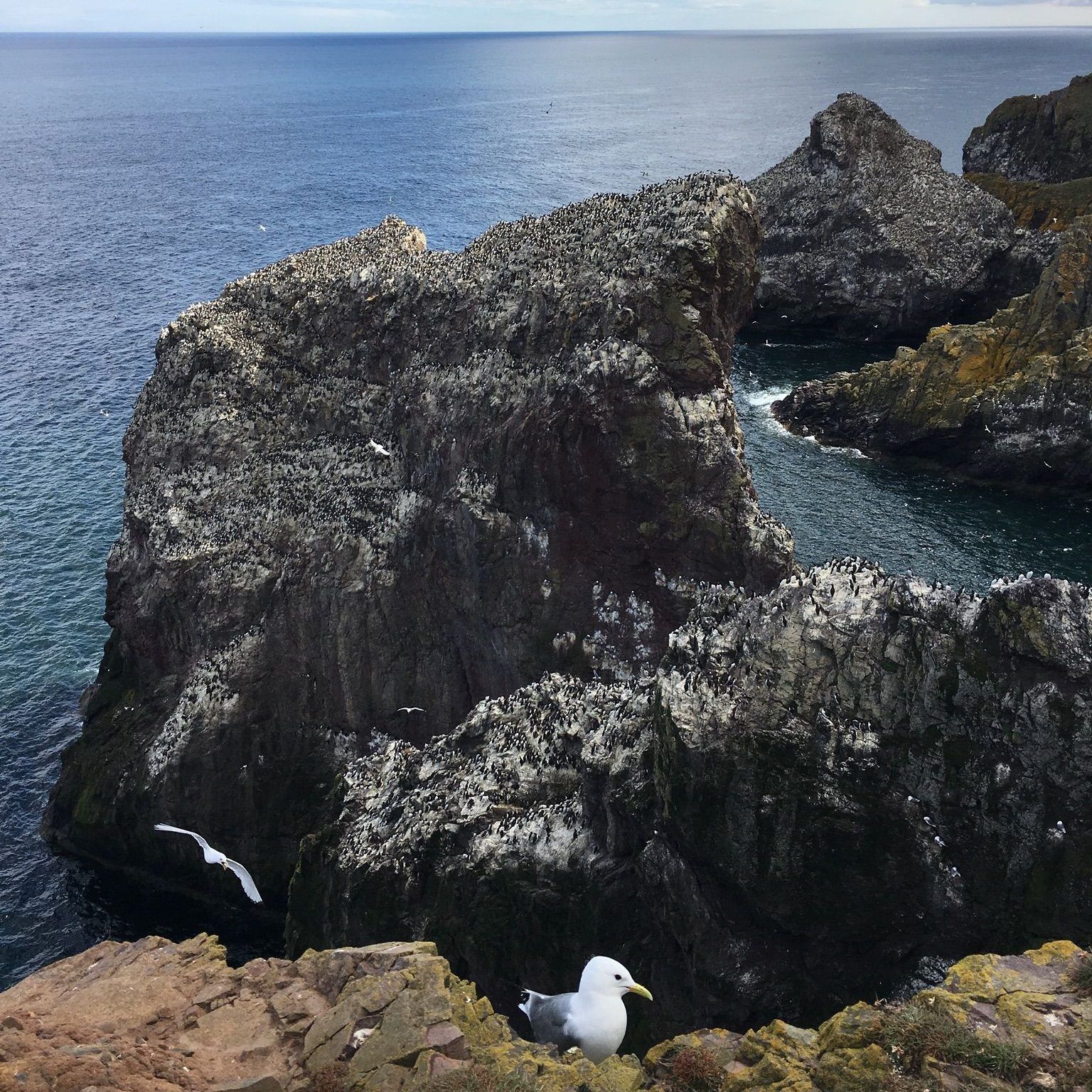


Northern Gannets are Scottish icons. Like a bright white cross branded against the sky, they have a long neck tapering into a spear-like blue-grey beak and black wingtips that seem dipped in ink. With a good view, you might see the sunset-yellow head, blue eyes or large, black webbed feet. Between bursts of flapping, gannets glide low over the water, sometimes in long lines of individuals. When a shoal of fish is spotted, they circle high before folding their wings and plunging into the water at speeds of up to 60 miles per hour.
With a wingspan of up to 2 metres, they are the UK’s largest seabird. There are few colonies in the UK. Most are in Scotland, including Bass Rock, Troup Head and St Kilda. Together, they support more than half of the world’s population, with 60% of Europe’s Gannets breeding around Scotland.
Such a significant share of the global population means Scotland’s responsibility of care is immense. Scotland’s actions directly shape the future of this species worldwide. Northern Gannets face multiple threats and require a holistic conservation approach. The 2022 epidemic of Highly Pathogenic Avian Influenza (bird flu) was a major hit to the species, killing thousands of birds. Mating for life and raising only one chick a year (if they’re lucky), populations may take decades to recover. Every chick is precious for the future of the species.
Northern Gannet is on the Scottish Biodiversity List, which identifies the species that are of the most importance to biodiversity in Scotland. They are also on the UK Birds of Conservation Concern Amber List.
Photos: David Palmer, Jude Lane and Andrew Bielinski for rspb-images.com
Action Needed
- Ensure offshore wind is developed in harmony with nature by applying the mitigation hierarchy and implementing strong ecological safeguards for strategic compensation.
- The proposed offshore windfarm at Berwick Bank is so damaging to seabirds that it cannot be compensated for and should not go ahead.
- Support the resilience of Gannet colonies in the face of disease, such as the recent bird flu outbreak.
- Effectively protect important areas for Gannets by consulting on fisheries management measures for inshore MPAs, ensuring that all marine stakeholders are fully involved, and implementing the results of the consultation.
- Secure funding to deliver the Scottish Seabird Conservation Action Plan, especially for the national Gannet census.
Threats
- Inappropriately sited offshore wind developments. Northern Gannets are ranked as one of the most vulnerable species in terms of collision with offshore wind turbines.
- Gannets getting unintentionally caught in fishing gear (seabird bycatch) in both the surface and pelagic fishing fleets.
- Disease outbreak (e.g. the 2022 outbreak of bird flu decimated gannet colonies).
- Marine litter pollution – Gannets will eat or become entangled in litter, which may lead to injury or death. They often incorporate fishing rope into their nests.
- Consequences of climate change such as warmer waters, potentially leading to lower quantities and quality of prey species.
MSP Nature Champion

Kayleigh Kinross-O'Neill
Member for: Edinburgh and Lothians East
Region: Edinburgh and Lothians East
Party: Scottish Green Party