
The common blue mussel (Mytilus edulis) is a bivalve mollusc found in high densities on intertidal shores and sediments around Scotland’s coastline. Subtidal blue mussel beds, however, are restricted to a few scattered locations in lochs and firths, including the Solway Firth, Firth of Clyde, Loch Creran, Loch Ailort, Dornoch Firth, Moray Firth, Firth of Tay and Whiteness Voe in Shetland. It is possible that beds still exist within the Firth of Forth.
Blue mussels are habitat-forming ecosystem engineers that create dense beds which support a wide range of other species, making them richer and more diverse in wildlife than surrounding areas. Subtidal blue mussel beds are one of the 81 priority marine features (PMFs) in Scotland’s seas and are a protected feature in three Marine Protected Areas: the Firth of Tay and Eden Estuary SAC, Dornoch Firth and Morrich More SAC, and the Solway Firth SAC. Where mussel beds fall within these designated areas, they receive legal protection as biogenic reefs under The Conservation (Natural Habitats, &c.) Regulations 1994 (as amended in Scotland).
Mussel beds can extend over several hectares and provide a remarkable range of benefits. As well as stabilising sediments and providing coastal protection, they filter out potentially harmful algae from seawater and play an important role in nutrient cycling and carbon sequestration by drawing organic material down to the seabed. They are also a critical food source for a wide range of marine and coastal species.
Historical records show that blue mussel beds had already been driven to decline in Scotland by the early 20th century. Heard et al. (2025) used archival records to reconstruct the historical extent of Scottish mussel beds. They found that intensive harvesting, exploitation, pollution and trawling led to widespread degradation from as early as the 18th century. The peak of mussel harvesting (primarily for bait) occurred in the late 19th century, followed by a rapid decline until the cessation of line fishing landings of mussels by 2004.
Of the approximately 1,800 ha of historically estimated blue mussel beds, 51% had been exploited or entirely destroyed by the early 1900s. Today, mussel beds remain far below their historical extent. Evidence from elsewhere in Europe suggests recovery is possible where pressures are reduced, though it is typically slow and dependent on suitable conditions. This makes preventing further loss the most urgent priority.
Photo: © JPrescott
Action Needed
- Promote sustainable blue mussel aquaculture to help meet consumer demand while reducing pressure on vulnerable natural seabed habitats.
- Support the Scottish Government’s Marine Directorate as it develops measures to protect vulnerable priority marine features, including proposals to restrict bottom-contact fishing gear within 6 nautical miles inshore, where many vulnerable habitats, including blue mussel beds, are situated.
- Raise the profile of existing efforts to improve the health of our marine environment
- Raise awareness of local citizen science surveys, such as the Show us Your Mussels initiative run by the Edinburgh Shoreline Project, which enable communities to engage directly with blue mussel monitoring and protection.
Threats
The most immediate and severe threats to blue mussel beds are from:
- Dredging: Dredging damages the physical structure of mussel beds, reducing habitat complexity and the biodiversity it supports.
- Harvesting: Blue mussel beds were fished to a fraction of their historical extent during the late 19th and early 20th centuries. This is a legacy that continues to undermine the resilience of remaining beds today.
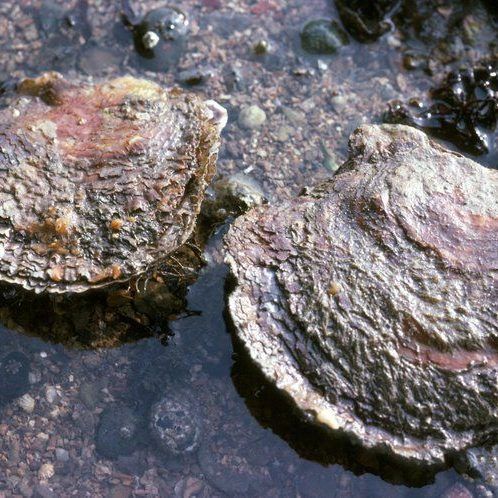
- Invasive species: The Pacific oyster (Crassostrea gigas) competes with blue mussels for space and can smother mussel beds as it grows.
- Poor water quality: Pollution and eutrophication can degrade mussel bed habitats and affect larval settlement and survival.
While blue mussels are generally tolerant of a range of environmental conditions, ocean acidification poses a growing threat, particularly during their larval stage. A more acidic ocean may lead to decreased shell growth and recruitment,
MSP Nature Champion

Kate Campbell
Member for: Edinburgh Eastern, Musselburgh and Tranent
Region: Edinburgh and Lothians East
Party: Scottish National Party