
One of our largest lichens, this vibrant green, leafy lichen, Tree Lungwort, grows in the best examples of Scotland’s rainforest.
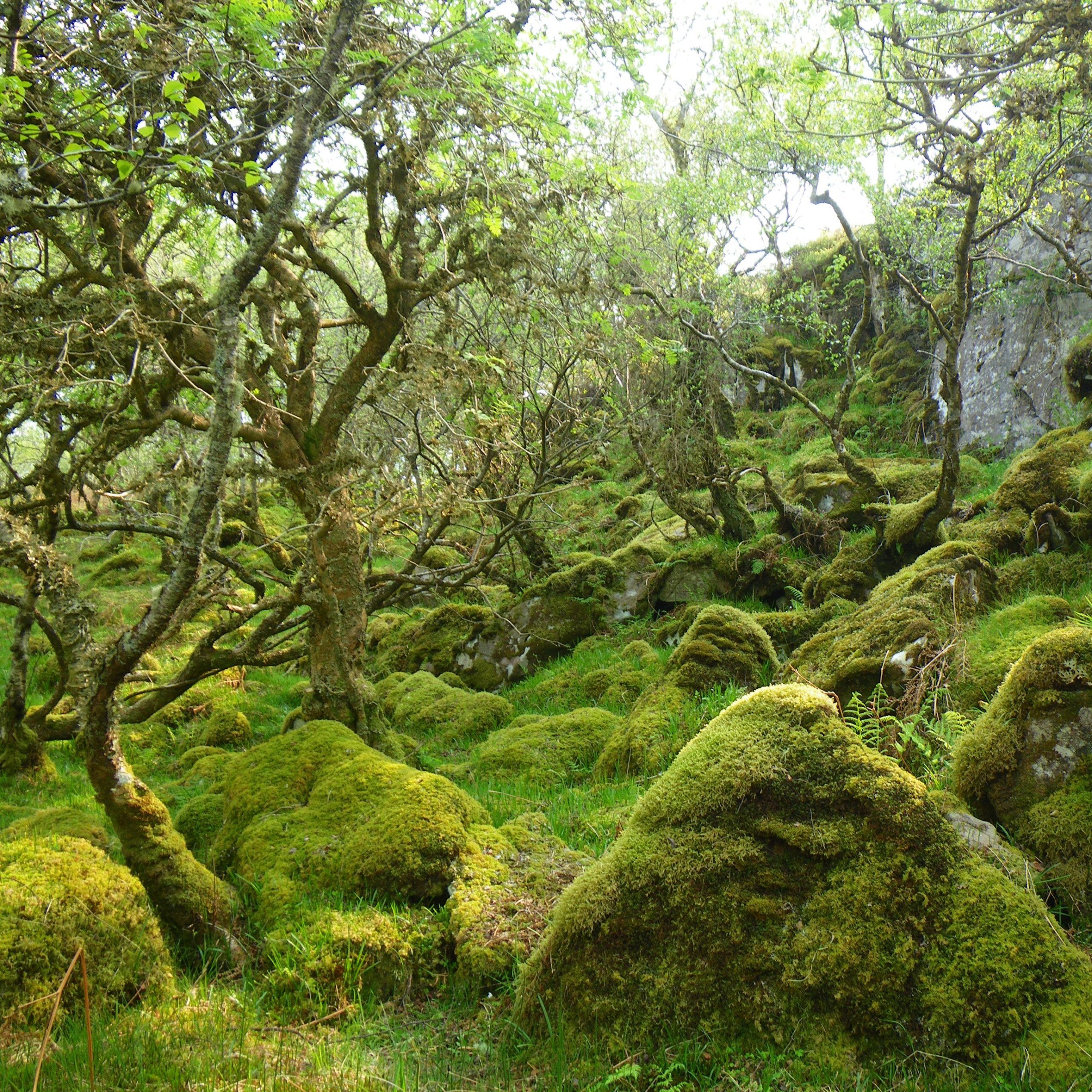
Scotland’s rainforest, is an internationally important habitat of ancient and native woodland, open glades, ravines and river gorges.
It is found on the west coast, where the combination of high rainfall and relatively mild year-round temperatures means woodlands are very humid. This humid climate allows Tree Lungwort to thrive. As a lichen it is very sensitive to impact of nitrogen pollution and can be most commonly found in old wood areas with higher air quality.
Scotland has some of the highest quality and largest remnants of rainforest in Europe and we owe it to the world to protect them.
Photo: © Dave Lamacraft / Plantlife
Action Needed
- Scotland’s Rainforest needs meaningful, long-term, upscaled funding from government for Scotland’s Rainforest.
- We need a comprehensive INNS plan for Scotland that works at landscape scale, will effective horizon scanning with buy-in from landowners.
- Strong implementation of Scottish Government’s strategic approach to restoring and expanding Scotland’s rainforest.
- Implementation and enforcement of new deer control regulation as outlined in the Natural Environment Act.
- Ban of sale of Rhododendron ponticum and its use as a rootstock, ideally in collaboration with other administrations via the British Irish Council, but unilaterally if necessary.
Threats
Almost all of Scotland’s rainforest shows little or no regeneration due to high levels of overgrazing, mainly by deer. This poses a risk to the long-term survival of the habitat, because as trees mature, they are not replaced, and the age variety is almost non-existent in the rainforest.
Increasing pressure from invasive non-native species such as Rhododendron ponticum, which chokes up at least half of the rainforest. Rhododendron, an invasive non-native species, can colonise the rainforest, shading out essential Tree Lungwort habitat, in addition to other characteristic flora, while outcompeting native trees.
MSP Nature Champion

Member for: