

This tiny, yet iconic species found in Caledonian pinewood, Twinflower (Linnaeus borealis) is one of Scotland’s rarest pinewood flowers. It has two pink bell-like flowers on a slender stem, and a thicker stem below which creeps along the ground, forming small mats of the plant. It is one of our smallest and most delicate native flowers.
Twinflower was first recorded near Aberdeen in 1795 and named after the famous botanist Carl Linnaeus. Its scent lends insight into common Scandinavian names; perfume flower and Little lily of the valley.
Despite its charismatic nature, and widespread interest, Twinflower has seriously declined in Scotland over the last few centuries. The main threat is habitat fragmentation, which leaves remaining patches of Twinflower isolated and unable to cross-pollinate.
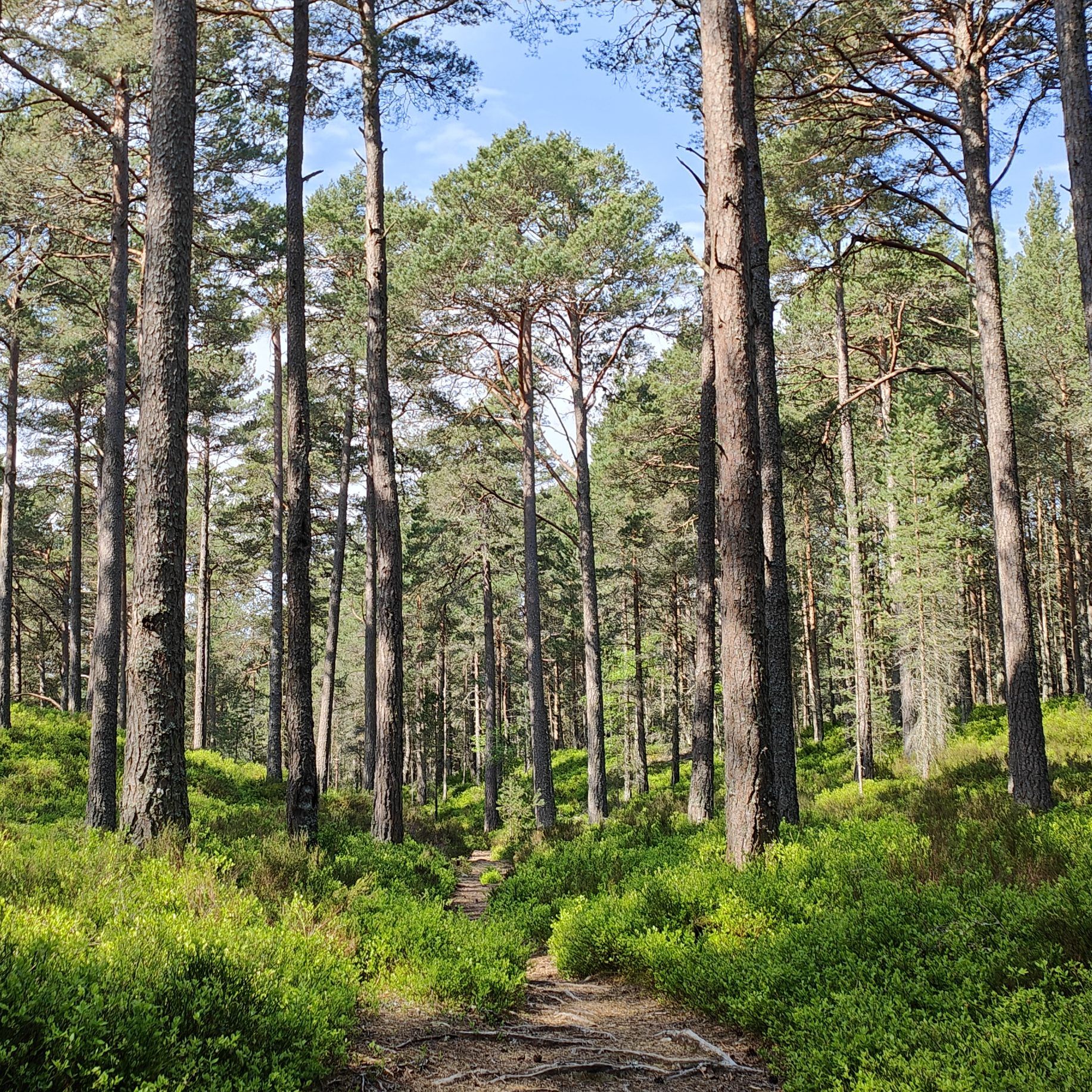
Thankfully, many different conservation organisations, professionals, and landowners have a keen interest in protecting Twinflower. The 2025 Scottish Biodiversity List includes Twinflower as a species of principal importance in Scotland, emphasizing the significance of recovering populations and acting to prevent further declines. There’s a hope to see it return to recovering native Scots Pine Pinus sylvestris woodlands across Scotland.
Photo: © Andrew Gagg / Plantlife
Action Needed
- Implementation of better woodland management schemes, including restoration and expansion of native Caledonian pinewoods, a reduction in non-native pine, less clear-fell forestry, and varied age structure woodlands. Natural Environment Act (Scotland) targets should include species recovery targets which will enable more action for rare species such as Twinflower.
- Championing the need for robust linkages between Natural Environment Act (Scotland) targets and the Scottish Biodiversity List to drive action for our most vulnerable species like Twinflower.
- Support development of Nature Networks in Scotland, which will reconnect fragmented habitats and help species like Twinflower to thrive.
- Support the establishment of local groups to deliver much-needed action for Twinflower, especially translocation work to repopulate areas where it has been previously lost from, following recommendations from Plantlife’s guide Managing Twinflower – Plantlife.
- Encourage action for Twinflower as part of public bodies’ Biodiversity Duty compliance and reporting (Scottish Biodiversity List species).
Threats
The isolation of the remaining sites of Twinflower leads to poor seed production and thus contributes to its continued decline. Other threats include mechanical clear fell of timber, the deliberate thickening of forests leading to excess shade, and poor management of pine plantations leading to single age structure woodland without a niche for seedlings to develop.
The clearance of native woodlands before the 1930s resulted in severe losses of this little flower. Less than 500 patches of Twinflower remain in Scotland, most of which support only one individual, with a total of about 725 distinct Twinflower individuals at these sites, a tiny remnant of a once widespread species. Nearly all these individuals are unable to reproduce naturally due to habitat fragmentation.
MSP Nature Champion

Yi-pei Chou Turvey
Member for: North East Scotland
Region: North East Scotland
Party: Scottish Liberal Democrats

Related Species & Habitats

Caledonian Pinewoods
- National Trust for Scotland
- Trees for Life
- Woodland Trust Scotland