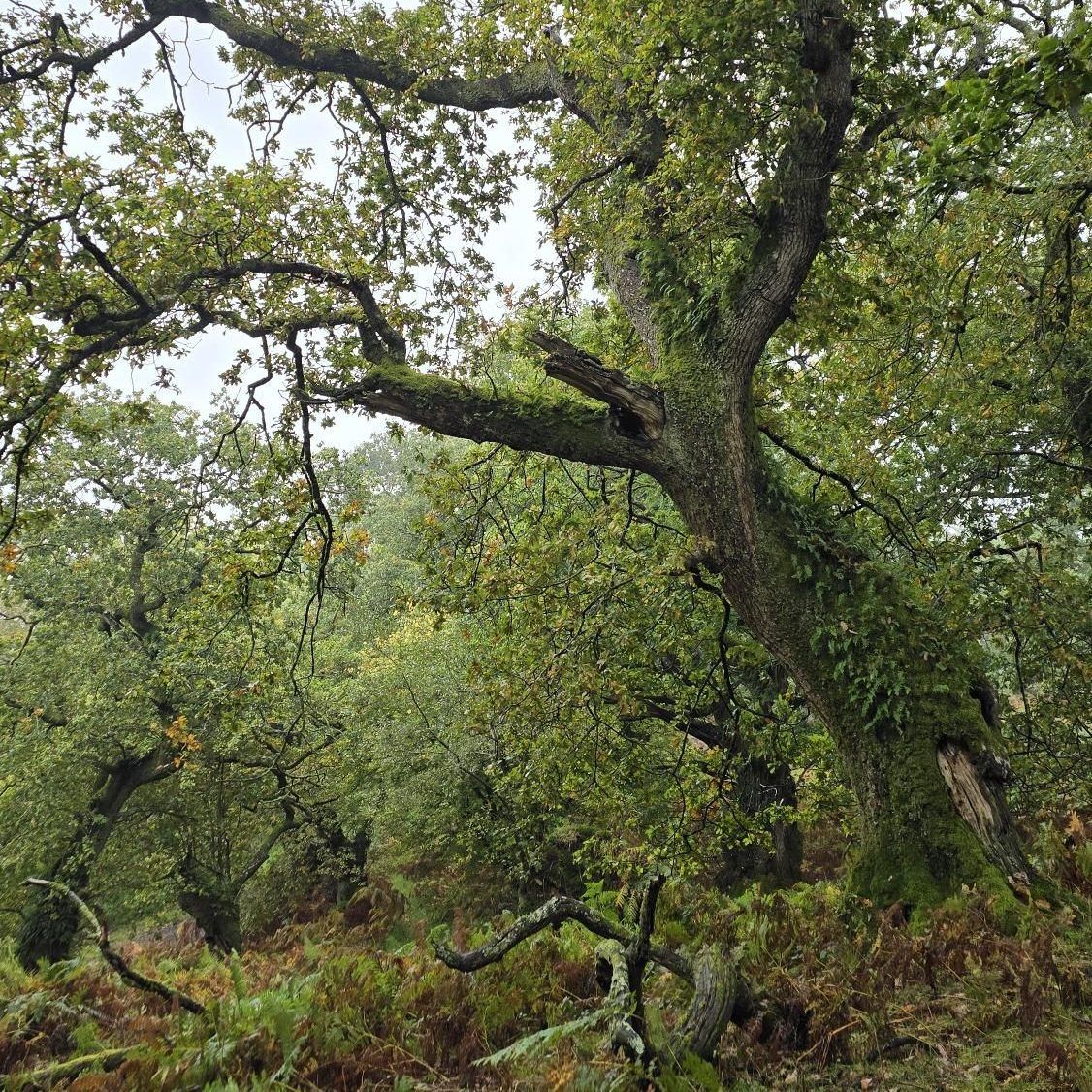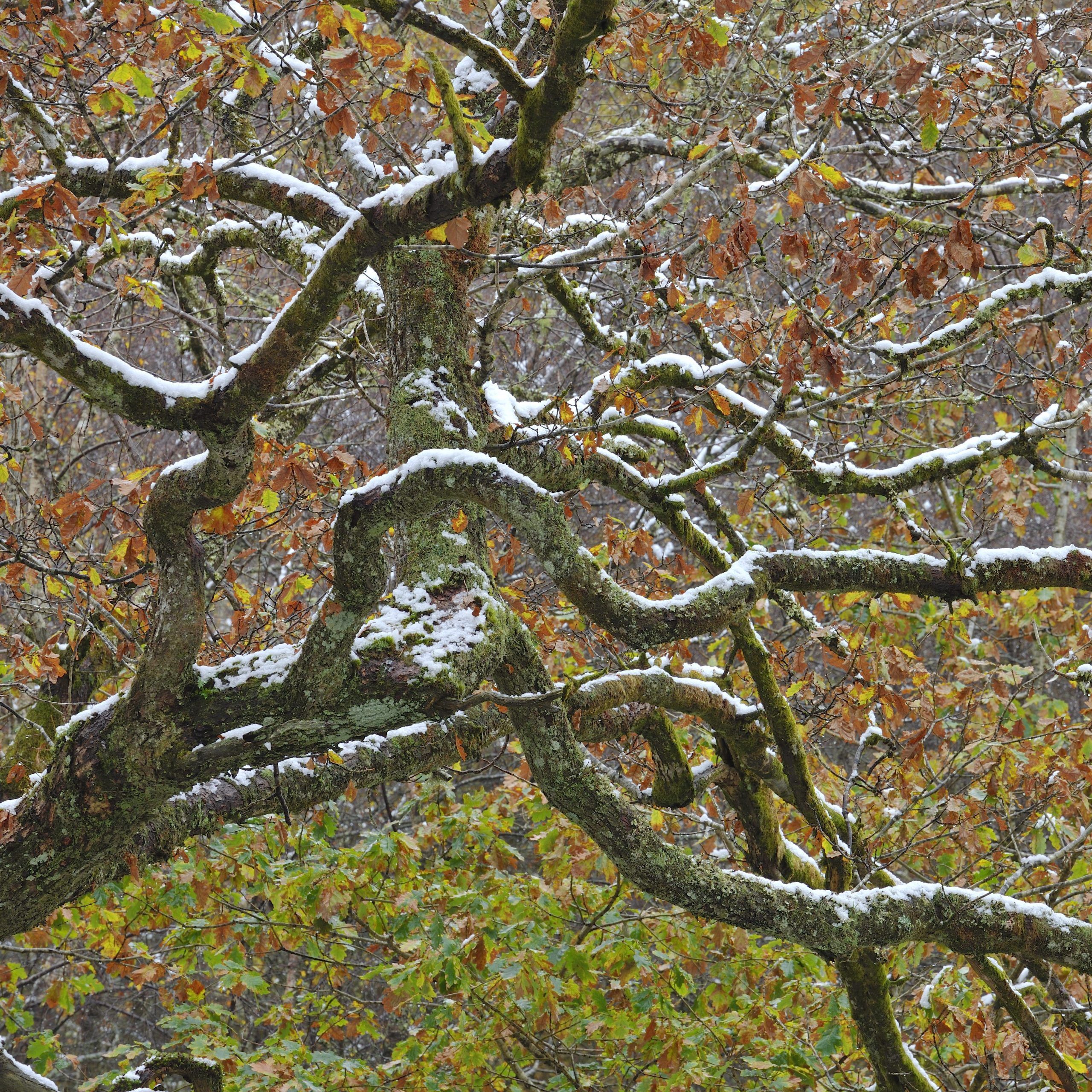

Wood pasture and parkland is a diverse habitat supporting rich communities of species, therefore important parts of Scotland’s nature. This habitat is created on land managed through grazing, usually cattle.
Parkland is similar to wood pasture in that both have open grown, long lived trees, but parkland may or may not have grazing. Wood pasture and parkland can be ancient, or of more recent origin. Some started as medieval hunting forests or wooded commons, and others are the designed landscapes from large estates.
Ancient wood pasture and parklands have accumulated characteristics including old trees and large pieces of decaying wood which are missing from many enclosed canopy woodlands. Woodland pastures and parkland are often perfect for spotting ancient and veteran trees, which are full of nooks and crannies, holes and dead and rotting wood. They offer a range of homes for both widespread and very rare species.
Trees in wood pasture and parkland are sometimes pollarded. This is an ancient form of management where trees are grown within grazed pastures. The crown was regularly cut at around eight feet high, above the browsing height of the stock below. This allowed the land to be used for both grazing and to provide useful material from the trees.
Glen Finglas near Stirling is an internationally important wood pasture and Cadzow Oakwood in Hamilton, and Old Oakwood in Dalkeith Country Park are internationally important parklands.
Photo: © National Trust for Scotland
Action Needed
- Support the collection and use of more reliable data on the extent of the overall cover for wood pasture and parkland to inform better management and protection of the habitat.
- Support grants for the provision of public funding to help land managers better look after their wood pasture and parkland areas, including support for planting more trees to ensure continuity of habitat.
- Promote the use of the Ancient Tree Inventory https://ati.woodlandtrust.org.uk/ to help identify important sites.
Threats
- Although grazing has shaped these important wooded habitats, sustained high levels of overgrazing over many decades will ultimately result in no new trees. Therefore, grazing needs to be carefully managed.
- These habitats can be under threat of inappropriate development, both permanent and temporary development such as some outdoor events.
- Conversion to more intensive agriculture is also an ongoing threat, and particularly the gradual loss of trees.
- Other threats include sites being isolated with limited connectivity for specialist species, as well as nitrogen air-pollution impacts on lichens associated with ancient trees.
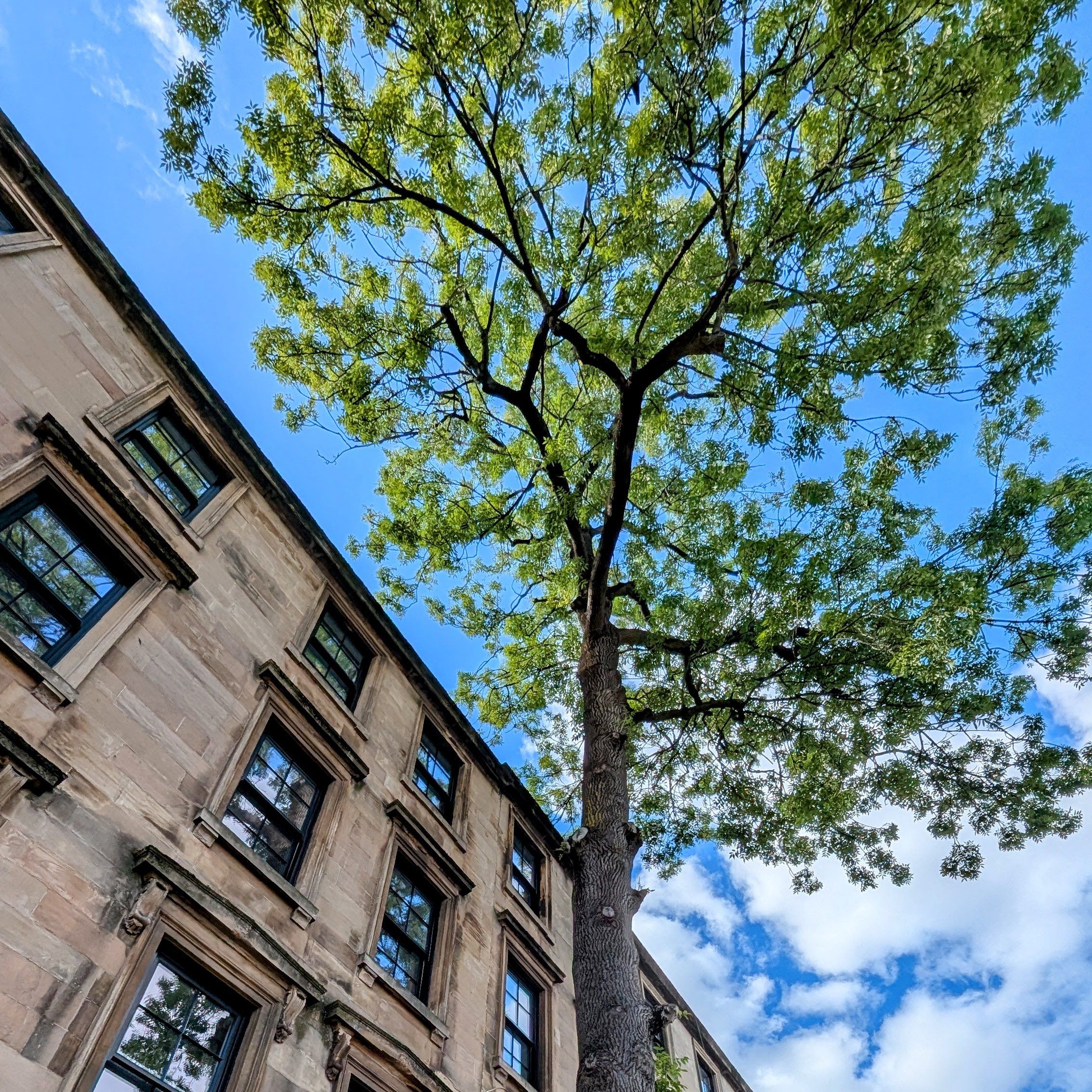
- Individual trees such as veteran oak and ash are also threatened by pests and diseases.
MSP Nature Champion

Murdo Fraser
Member for: Mid Scotland and Fife
Region: Mid Scotland and Fife
Party: Scottish Conservatives